Planning a water heater project? Get a personalized estimate or check a quote you already have.
Tankless water heater cost: what you actually pay in 2026
The pitch for tankless is pretty compelling: endless hot water, longer lifespan, lower energy bills. The reality is a bit more complicated, especially when you factor in installation. Here's what the full cost looks like and when it actually makes sense to make the switch.
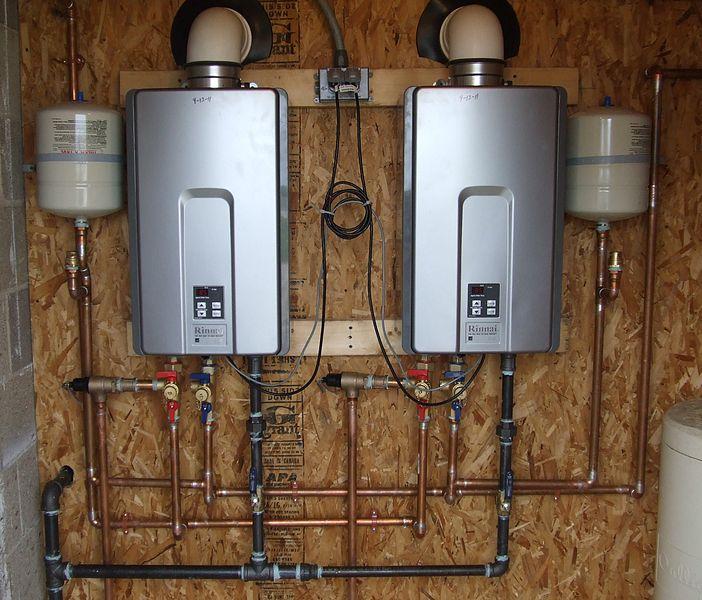
Tankless vs. tank: the actual cost difference
A standard tank water heater replacement — 40 to 50 gallons, gas or electric — runs $800 to $1,800 installed. That's the baseline. A tankless unit costs more: $1,000 to $3,500 installed depending on fuel type and what the installation requires. The gap is real, and installation complexity is most of it.
Our full water heater cost guide covers tank vs. tankless in detail, including all the cost factors by unit size and fuel type. What follows here is specifically about tankless — what drives the price, what the installation involves, and when the math actually works out in your favor.
| Type | Unit cost | Installed total |
|---|---|---|
| Tank water heater (gas or electric) | $400 - $900 | $800 - $1,800 |
| Electric tankless | $200 - $600 | $800 - $1,500 |
| Gas tankless (like-for-like swap) | $600 - $1,200 | $1,500 - $2,500 |
| Gas tankless (new venting + gas line work) | $600 - $1,200 | $2,000 - $3,500 |
Gas vs. electric tankless: what actually costs more and why
Gas tankless units are more expensive to buy and install, but cheaper to operate in most of New England where natural gas rates are lower than electricity per BTU. The flip side: they require dedicated venting, and many older homes need gas line upgrades too.
The venting is usually the big surprise. Unlike tank water heaters that use a simple flue, gas tankless units typically need a concentric stainless steel vent system — two pipes, one for intake and one for exhaust — running to an exterior wall or roof. If you're replacing an old tank in a basement with existing chimney venting, the plumber has to install new pipes. That alone can add $400 to $900 to the job.
Electric tankless units skip the venting problem entirely, but they pull a lot of power. A whole-house electric tankless unit typically needs two or three 240V/40-amp circuits. If your home has a 100-amp panel — common in older RI and southeastern Massachusetts homes — you'll probably need a panel upgrade before you can run one. That's another $1,500 to $3,000 on top of the water heater. Our HVAC cost guide mentions this same issue with electric heat pumps, and it's equally true here.
For homes with natural gas already run to the house and a panel that can handle the ignition load (just a small 120V connection), gas tankless is almost always the better long-term choice in this region.
What actually drives up the installation cost
The unit itself is often the smaller part of the invoice. Here's what adds up:
Venting
Gas tankless units need direct-vent or power-vent setups. If the unit is going where the old tank was, the plumber needs to run new pipe to the outside. Depending on the distance and whether they're going through a wall or up through the roof, this adds $300 to $900. A through-the-wall installation is cheaper. A long run through a finished basement ceiling is not.
Gas line sizing
A high-output tankless unit (180,000-199,000 BTU) needs more gas than a tank heater (around 36,000-40,000 BTU). The existing 1/2-inch gas line that fed your old tank may not be large enough. Upgrading to 3/4-inch from the meter adds $200 to $600 depending on the run. Some contractors catch this during the quote; others find it when they start the job.
Electrical upgrades (for electric units)
This one can completely change the economics. A whole-house electric tankless unit — something like an Eemax or Stiebel Eltron in the 18-24 kW range — needs 150-200 amps of panel capacity just for the water heater. If your panel is 100 amps total, you're looking at a full electrical panel upgrade before installation can happen. That changes a $1,200 job into a $3,500 job fast.
Water quality and scale
Hard water kills tankless units faster than tanks. The narrow heat exchanger channels scale up more quickly than an open tank. In Rhode Island and southeastern Massachusetts, water hardness varies by municipality — Warwick and Fall River have harder water than Providence. A descaling filter or water softener adds $200 to $600 but extends the unit's life significantly. Some plumbers include it; some don't mention it. Ask.
Rhode Island and southeastern Massachusetts: a few things worth knowing
Cold groundwater is one of the bigger challenges for tankless units in this region. In January and February, incoming water temps in RI and southeastern MA can drop to 38-45°F. That matters because tankless sizing is based on how many degrees you need to raise the water, not just flow rate. A unit rated for 7 GPM in Florida might only deliver 4 GPM here in winter when it has to work 30 degrees harder.
This is why undersizing is a common complaint. Homeowners get a unit that worked fine through October and then run out of hot water mid-shower in January. The fix is to size up — plan for a unit rated at 10+ GPM at your local incoming water temperature, not just the manufacturer's published flow rate.
Older homes are also the norm here. The median Rhode Island home was built in 1963. Many still have original galvanized or copper pipes that were sized for a tank system. A tankless retrofit in a pre-1970 home often involves more coordination — checking pipe sizes, locating the gas meter, confirming there's a dedicated electrical circuit for the unit's control board. It's not a dealbreaker, but it's rarely a clean afternoon job either.
Natural gas is widely available in most of Providence, Cranston, Warwick, Pawtucket, and the southeastern MA cities. If you have it, use it for the tankless unit. If you're on propane or oil, the economics of gas tankless don't apply the same way — talk to your plumber about what makes sense for your setup.
When tankless is worth it — and when it's not
The answer is genuinely situational, which I know is an annoying thing to say, but it's true. The same upgrade that makes total sense in one house is a money pit in the next one.
Tankless works well if you're replacing a gas tank in a home that already has 3/4-inch gas lines and a good spot for through-the-wall venting. A straightforward installation runs $1,500-$2,200 versus $800-$1,200 for a tank replacement. Energy savings of $100-$200 per year get you to payback in 5-10 years, and the unit lasts 20+ years versus 10-12 for a tank. That math works.
It also makes sense if you're renovating and adding a bathroom, finishing a basement, or building an addition. Tankless doesn't run out of hot water if you're adding demand. A 50-gallon tank that was fine for two bathrooms may struggle with three. Tankless scales without the same limitation.
And if you're losing a lot of space to a tank in a tight mechanical room or closet, the wall-mounted form factor of a tankless unit is genuinely useful. Some of these are about the size of a carry-on suitcase.
When it's probably not worth it
If you need a panel upgrade to run electric tankless, the payback period stretches past 20 years. Just get a tank.
Propane homes are trickier. If you're paying $4-$5 per gallon for propane, the operating cost advantage of tankless is much smaller than the manufacturer's brochure suggests. Those savings calculations assume natural gas at around $1/therm. Propane is a different fuel at a different price, and the math changes a lot.
If you're planning to sell in the next two or three years and the water heater still works, replacing it with a tankless unit is unlikely to add more to the sale price than it costs. Buyers notice it, but they don't pay a premium for it. Fix things that are broken; upgrade things that affect daily life.
Getting quotes: the spread is wider than you'd expect
Tankless quotes vary more than almost any other plumbing job because the installation variables differ so much house to house. Two quotes for the same unit in the same town can be $800 apart. Usually that's not someone gouging you — one contractor included venting and gas line work in the price and the other didn't.
When you're getting quotes, ask each contractor to itemize: unit cost, labor, venting materials, any gas line work, and any electrical. If one quote looks low, find out why — it may be that they're planning to reuse existing venting that isn't suitable for a tankless unit, which becomes a problem later.
Also ask about permits. In Rhode Island and Massachusetts, water heater installations require a permit from the local building department. Most licensed plumbers pull permits as a matter of course. If a contractor says permits aren't necessary, that's a flag.
Getting multiple quotes from licensed local plumbers is the best way to understand what your specific installation costs — and to catch anyone who's quoting low and planning to make it up in change orders.
See what a tankless install costs at your address
Costs vary a lot depending on your home's setup — gas availability, panel capacity, venting distance. Get quotes from local plumbers who can actually look at the job.